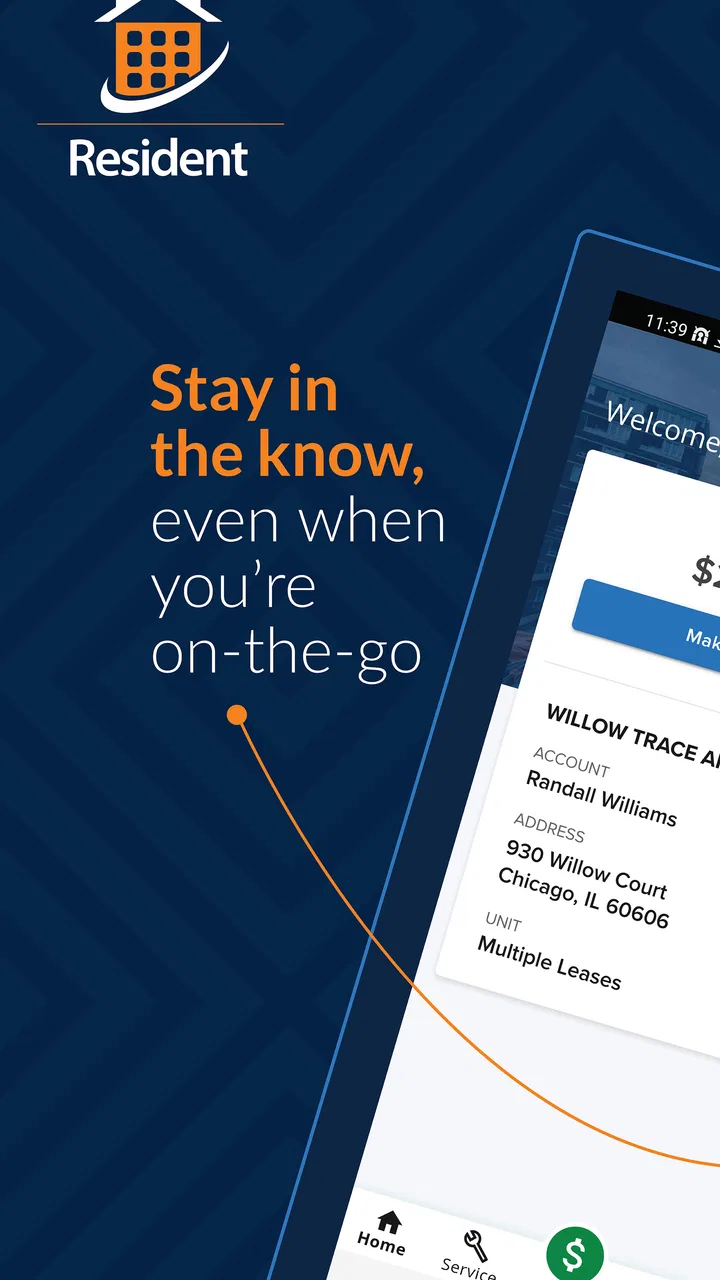
rmResident
- 3.9
- Rating
- 500.00K
- Installs
- Free
- Price

 Analysis by App-foxy
Managing resident payments and service issues from a phone sounds like a small convenience, but it can remove a surprising amount of everyday friction. I found rmResident most useful when I treated it as a practical access point for routine resident tasks rather than as an all-purpose property-management tool. It is a free productivity app from LCS, aimed at people who need to make or view payments, keep an eye on service matters, and handle related resident activity without sitting at a computer.
The first impression is straightforward. The app is available to users aged Everyone, supports devices running Android 6.0 or later, and has reached over 500 thousand installs. Its average rating sits at 4.1 from around 4 thousand ratings, with roughly 2 thousand written reviews, so it has clearly found a regular audience rather than being a barely used companion app. I also noticed that its value depends less on novelty than on whether your building, landlord, or housing provider actually uses the LCS system behind it.
What rmResident feels like in everyday use
During the first week, the main appeal is convenience. A resident usually does not want to search through old emails, remember a portal address, or wait until they are at a laptop just to check whether a payment went through. Having those tasks gathered in a mobile app makes the process feel more immediate. I can imagine opening it while commuting, after receiving a reminder, or when checking household finances at the end of the week.
You May Also Like

 Blood Strike: 2.5 Anniversary
Blood Strike’s Loadouts Turn Every Drop Into a Tactical Gamble
A close look at Blood Strike’s custom loadouts: how fast access to signature weapons reshapes its battle royale rhythm, rewards preparation, and narrows the gap between fights.

 Pandora - Music & Podcasts
Pandora’s Music Is Easy to Start, but Harder to Recover
Pandora’s strength is its low-effort path from a seed to a station. Its weak spot is how much confidence it asks you to place in connection, setup, and quiet recovery.

 8 Ball Pool
 Is Built on Rivalries, Rematches, and Routine
A close look at the rivalries, rematches, shared routines, and unanswered safety questions that turn a quick pool match into a persistent mobile community.

 Samsung Music
’s Quiet Strength Is Playing What You Already Own
Its reach comes less from spectacle than from dependable access to a personal library. That simplicity is both the app’s strongest retention engine and its ceiling.

 AccuWeather: Weather Radar
AccuWeather Review: A Quick, Clear Forecast for Everyday Decisions
For everyday plans, the best forecast is the one you can understand quickly. AccuWeather makes rain timing, radar, and local conditions easy to act on, with a few trade-offs.

 Hill Climb Racing
Why Hill Climb Racing Still Turns Crashes Into One More Run
A tiny car, a bumpy hill and one more upgrade: Hill Climb Racing keeps resurfacing because its simple chaos makes every near-miss feel personal.
More From Our News Desk
View All News


The strongest use case is a simple one: you are preparing to pay, want to verify the amount, and need a quick way to review the account before completing the task. That short sequence matters because it reduces uncertainty. Instead of treating payment as a separate chore that requires a full desktop session, the phone becomes the place where the task can be checked and completed as part of an existing routine.
The service-issue side is useful for a different reason. A maintenance problem is often noticed at an inconvenient moment—a leak, a broken fixture, a heating concern, or a problem in a shared area. A resident-focused app gives you a natural place to start recording or reviewing that issue. I would still include clear details and, when appropriate, photos or other supporting information through whatever workflow the property provider makes available. The important point is not that the app magically solves maintenance, but that it can make the first report less likely to be postponed.
That distinction is worth keeping in mind. rmResident is a resident portal on a phone, not a replacement for the people responsible for responding to a problem. The app can help you submit or follow an issue, but response times, decisions, and repairs remain dependent on the housing organization. This is one of the first practical limits I would explain to a friend before recommending it.
The first-week appeal comes from removing small obstacles
New users will probably appreciate the directness of having resident-related actions in one place. The app’s store summary focuses on payments and service issues, and that narrow purpose is actually a strength during the first few days. You do not have to learn a complicated productivity system or build a personal workflow from scratch. You install it, connect it to the resident relationship established by your provider, and use it when a relevant task appears.
There is also a useful psychological benefit to mobile access. When a payment or service request is handled on the same device used for reminders and daily communication, it becomes easier to act immediately. I am more likely to check a balance or report a problem when the action takes place in the same short window in which I noticed it. That is a modest improvement, but these small reductions in effort are often what determine whether an administrative task gets completed.
Still, the first-week experience is not equally valuable for everyone. If you do not live in a property connected to LCS, the app is unlikely to become useful simply because it is installed. It is also not the right download for someone looking for general budgeting, bill comparison, document storage, or a universal home-maintenance organizer. Its usefulness is tied to a specific resident relationship, which makes it more focused than broad finance and household apps.
That focus also affects how I compare it with usual alternatives. A mobile browser can often reach a resident portal, but a dedicated app is more convenient when you check the same information repeatedly. Email can handle payment reminders and maintenance conversations, yet messages are easy to lose among unrelated mail. A spreadsheet may help with personal records, but it cannot replace the provider-facing workflow. In those comparisons, the app wins through access and organization, not through a large collection of extra tools.
Month-to-month value depends on recurring habits
After the initial curiosity fades, the question becomes whether the app earns a permanent place on the phone. In my view, it can, but only when I connect it to recurring moments. Checking the account before a regular payment, reviewing an open service issue once a week, and confirming that a recently reported problem is still visible are better habits than opening the app randomly. The app’s long-term value comes from these repeatable checks.
A realistic monthly routine would be simple. At the start of the month, I would open the payment area, confirm what is due, and make the payment if needed. A few days later, I would return to verify the status rather than relying only on memory. If I had reported a repair, I would use the same visit to check whether the issue had progressed. This turns the app into a small administrative checkpoint instead of another notification-heavy service competing for attention.
One non-obvious advantage of that routine is that it can separate two questions residents often mix together: “Did I submit this?” and “Was it actually processed?” Keeping those checks distinct helps avoid duplicate actions. I would not make a second payment merely because I was unsure whether the first attempt had completed; I would first review the visible status and, if necessary, contact the provider. The app is most helpful when it gives you a clearer record to consult before acting again.
Another useful habit is to report service issues as soon as the problem is clear enough to describe. Waiting until a minor issue becomes urgent creates stress and can make the history harder to reconstruct. If the app lets you review your previous submissions, that record can help you remember what was already reported and when you last checked it. I would still keep important details in my own notes when the matter is serious, because a phone portal should not be treated as the only archive for every housing concern.
The app is free, which lowers the barrier to keeping it installed. However, free access does not automatically create recurring value. If your payments are infrequent and you rarely need to contact the property team, a mobile browser bookmark may be enough. In that situation, the dedicated app may feel like an extra icon rather than an essential tool. Its lasting place is earned through repeated resident tasks, not through the installation itself.
Maintenance is light, but consistency matters
The maintenance burden is relatively easy to understand: keep the app updated, keep your account access available, and remember to check it when a resident task is active. The current version is 1.52, and the app was released on March 26, 2021, so it is not a brand-new experiment. That history is reassuring in one sense, because the product has had time to become an established part of the LCS resident experience, but it also means users should judge the current workflow on their own device rather than expecting constant reinvention.
I would avoid opening the app only when something has gone wrong. That pattern creates a maintenance burden of its own: forgotten credentials, uncertainty about the last payment, and a rush to learn the interface while dealing with a repair. A better approach is to perform a quiet check during an existing monthly routine. If everything is in order, the visit takes little time; if something needs attention, you discover it before the issue becomes more urgent.
There is a practical trade-off between convenience and record keeping. A provider-facing app may show the information you need in the moment, but I would not assume it replaces personal documentation. For important payments or serious service issues, I would retain confirmation details in a safe place. That is not a criticism unique to this app; it is good administrative practice whenever a service is accessed through a single portal. The app can be the working interface while your own records remain the backup.
Users may also wonder whether it works without a participating housing provider. The answer is central to deciding whether to keep it: the app is designed around an LCS-connected resident account, so the relevant question is whether your property has enabled that relationship. If your provider does not use the system, the app cannot become useful through personal effort alone. I would check that connection before spending time troubleshooting an account that may not be supported by your property’s setup.
The minimum operating-system requirement of Android 6.0 or later is modest, so compatibility should not be a major concern for many Android users. Even so, older devices can behave differently from newer ones, particularly when handling sign-in screens or system notifications. If the app feels slow or unreliable on an aging phone, I would first compare the same resident account through the provider’s normal alternative before deciding that the account itself is at fault.
Where fatigue begins after the novelty fades
The biggest source of fatigue is repetition without enough new information. Payment apps are useful when they answer a question quickly, but less satisfying when every visit feels like a formal administrative session. If you only open the app to perform one predictable action, you may eventually prefer a browser shortcut or a reminder that takes you directly to the provider’s portal. The dedicated interface earns its place only when it saves enough effort to justify another app on the phone.
Maintenance tracking can create a second kind of frustration. Residents often want a clear answer about what will happen next, while a service-issue workflow may only show that a request exists or remains under review. I would not blame the app for every delay, because the property team controls the response, but the user experience can still feel incomplete when the mobile record does not provide the clarity a resident wants. For urgent or safety-related concerns, I would contact the responsible office or emergency service directly rather than relying solely on an app submission.
There is also a risk of false reassurance. Seeing a payment or issue listed can make you feel that the matter is finished, even when it still needs confirmation. My advice is to treat visible status as useful evidence, not as permission to stop thinking. Check the wording carefully, look for the final state of a payment, and keep following up on unresolved repairs. That small discipline is one of the more important ways to use the app well.
Another trade-off concerns households. If several people share responsibility for rent or maintenance, a single resident account may not reflect the full household conversation. The app can support the account holder’s tasks, but I would not assume that every household member sees the same information or receives the same updates. Agreeing on who checks payments and who follows service issues prevents duplicated reports and reduces confusion.
For users who want advanced personal finance tools, this app will probably feel limited by design. It is not a replacement for a budgeting app that categorizes spending, forecasts cash flow, or combines multiple accounts. Likewise, someone who wants a broad task manager may prefer a general productivity tool. The right comparison is not “Which app has more features?” but “Which tool handles this exact resident task with less friction?” On that narrower question, rmResident has a sensible reason to exist.
Who should keep it installed
I would recommend keeping it installed if your property uses LCS and you make recurring payments or regularly need to report and monitor service issues. It is especially suitable for residents who prefer handling short administrative tasks from a phone, people who are often away from a computer, and anyone who tends to lose portal emails in a busy inbox. The free price also makes experimentation easy: you can see whether it fits your provider’s workflow without adding a subscription to the household budget.
I would be more cautious for residents whose property team communicates almost entirely by email or through another portal. In that case, the app may divide your attention between two systems instead of simplifying it. I would also skip it as a general household organizer. Its purpose is specific, and that specificity is helpful only when it matches the way your housing provider operates.
One practical test is to use it through a complete cycle rather than judging it after installation. Make or review one payment, check the resulting status, and use the service workflow for a non-urgent issue only if you genuinely have one. Notice whether the app reduces searching and uncertainty or merely duplicates what you already do in a browser. That test gives a better answer than the first impression because it measures recurring usefulness rather than setup novelty.
The developer, LCS, has positioned the product around resident-facing access rather than a broad consumer platform. That makes the experience easier to understand, but it also means the surrounding service relationship matters enormously. A polished mobile screen cannot compensate for unclear account ownership, slow responses, or a property team that does not keep its resident information current. I judge the app as one part of a larger process, not as the entire process.
After using it with that expectation, I see rmResident as a practical utility that can earn lasting space when it becomes part of a monthly habit. Its best qualities are convenience, a focused purpose, and the ability to bring payment and service-related actions closer to the moment they matter. Its weaknesses are equally clear: usefulness depends on provider participation, repeated checks can become tedious, and the app cannot control what happens after a request is submitted.
My final recommendation is therefore conditional but positive. If your housing provider supports it, I would try it and build one small routine around payment verification and service follow-up. Keep personal records for important matters, do not confuse a submitted request with a completed repair, and use direct contact for urgent problems. If the app consistently saves you from searching through emails or logging into a desktop portal, it has earned its place. If it only duplicates another channel you already use successfully, uninstalling it is reasonable. The lasting value is not in opening it every day; it is in making the few resident tasks that recur each month easier to finish correctly.
FAQs for rmResident
01What is rmResident and what can it do for me?
rmResident is a comprehensive property management app designed for both property managers and residents. It simplifies communication, streamlines maintenance requests, and provides easy access to important documents. Residents can also make online payments and stay updated with community announcements, enhancing the overall living experience.
02Is rmResident compatible with both Android and iOS devices?
Yes, rmResident is available for download on both Android and iOS platforms. The app is designed to work seamlessly across devices, ensuring that users can access features and updates whether they’re using a smartphone or a tablet, providing flexibility and convenience.
03How user-friendly is the rmResident interface?
The rmResident app features an intuitive and user-friendly interface. It’s designed to cater to users with varying levels of tech-savviness. The app organizes features logically, making it easy to navigate through different sections, such as payments, maintenance requests, and community updates, without any technical hassles.
04Are my personal and payment details secure on rmResident?
Security is a top priority for rmResident. The app employs advanced encryption methods to protect your personal and payment information. Additionally, it complies with industry standards for data protection, ensuring that your information remains confidential and safe from unauthorized access.
05Can I access rmResident features offline?
While some features of rmResident require internet connectivity, such as making payments or sending maintenance requests, users can access certain offline functionalities like viewing previously downloaded documents or announcements. However, for a full experience, an internet connection is recommended.
Pros
- User-friendly interface enhances experience.
- Real-time notifications keep residents updated.
- Secure payment options integrated within the app.
- Efficient maintenance request submission process.
- Community events feature fosters engagement.
Cons
- Limited customization for individual preferences.
- Occasional bugs can disrupt app performance.
- No offline mode for accessing certain features.
- Customer support response time can be slow.
- Requires frequent updates for optimal use.

rmResident
Gallery